 En
/ €
 Français
-€0.95




Learn more...
Triops are branchiopod crustaceans with opportunistic behavior: they feed according to available resources, consuming both plant matter (algae, organic debris) and animal prey, such as small aquatic invertebrates.
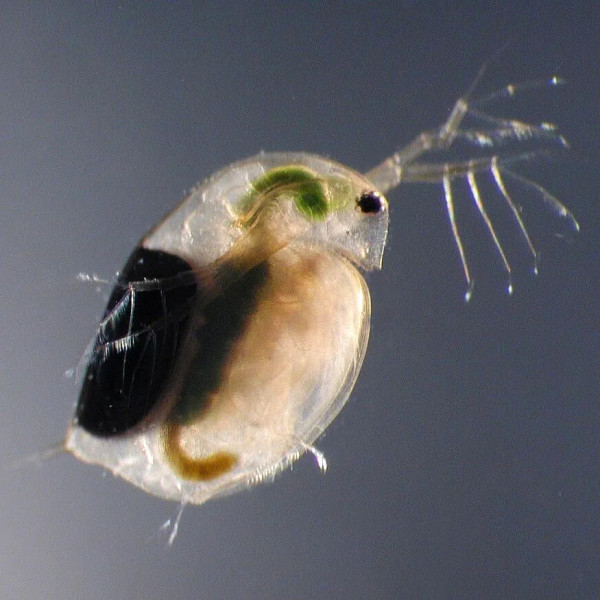
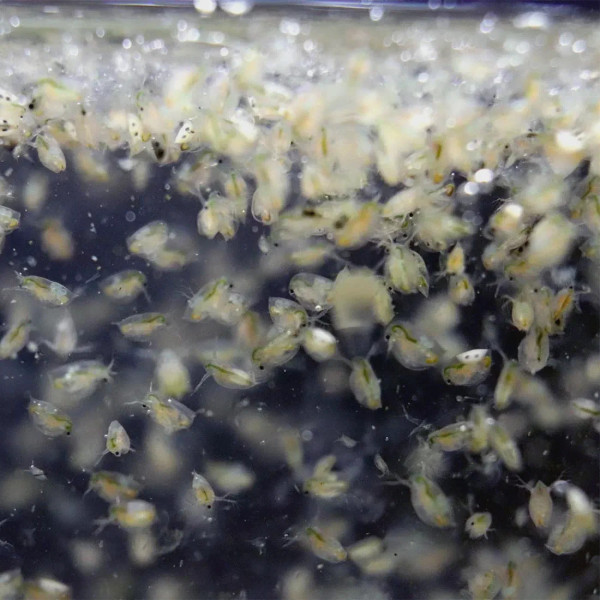
These natural prey include daphnia, tiny planktonic crustaceans found in temporary pools, a typical Triops habitat. Their small size (0.2 to 5 mm depending on the stage) and their nutritional richness make them a perfectly adapted food source, particularly for juvenile and adult Triops, which are capable of capturing mobile prey. Thanks to their balanced composition, daphnia effectively complement the diet of Triops and promote their growth and vitality.
Learn more about the importance of daphnia in the diet of Triops...
According to studies on the feeding ecology of branchiopods (Journal of Crustacean Biology, Walton et al., 1996, DOI:10.2307/1548686), Triops readily consume crustaceans such as daphnia in their natural habitat, which supports their growth and reproduction.
When conditions become unfavorable, daphnia produce dormant eggs which, unlike normal eggs, do not hatch immediately. These eggs are enclosed in a protective shell called an ephippia. This structure allows them to survive difficult periods while waiting for more favorable conditions to hatch.
These specific eggs are designed for long-term survival and can therefore be harvested and stored.
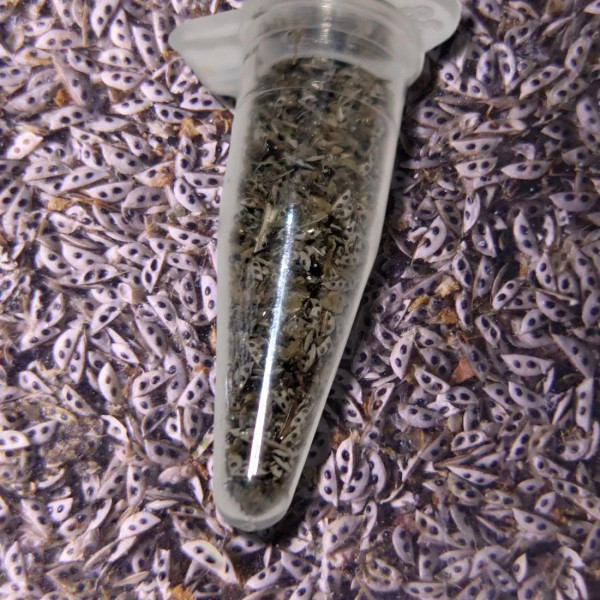
Your order of Daphnia magna eggs (ephippia) includes:
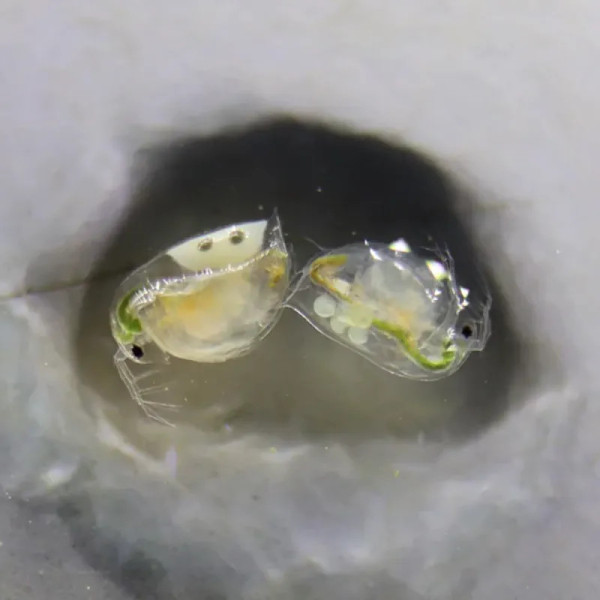
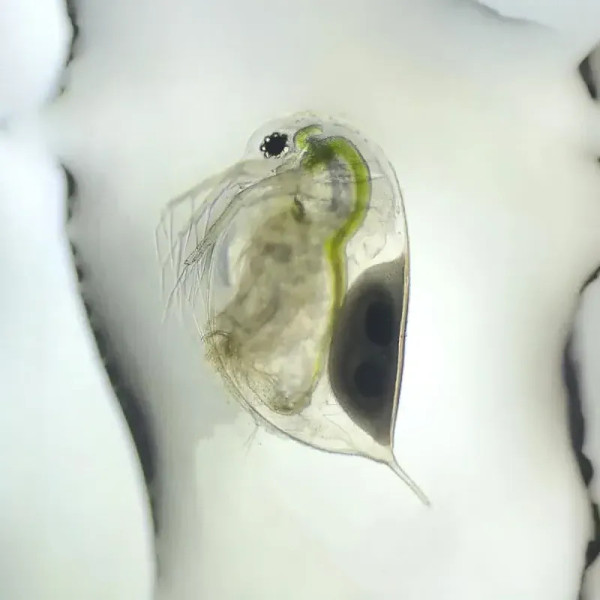
Daphnia (genus Daphnia), commonly nicknamed "water fleas" due to their jerky movement, represent an exceptional natural food source for your Triops. These small planktonic crustaceans measure between 0.2 and 5 mm, making them easily consumed by Triops from the juvenile stage.
They are a remarkable source of highly digestible animal proteins, perfectly suited to the nutritional needs of Triops. Rich in 50 to 60% protein on a dry matter basis, they provide the essential amino acids needed for the rapid growth of these branchiopod crustaceans. A sufficient protein intake is essential to support tissue synthesis, ensure efficient molting, and promote the development of a healthy and robust biomass.
They contain approximately 10 to 20% lipids, making them a valuable energy source for Triops. Their unsaturated fatty acid profile is particularly beneficial: these essential lipids support metabolism, promote proper nervous and immune system function, and facilitate the absorption of fat-soluble vitamins, thus contributing to the Triops' overall vitality.
They are also an excellent source of essential minerals, particularly calcium and phosphorus. These two elements play a fundamental role in the calcification and hardening of the Triops' exoskeleton. After each molt, Triops must quickly rebuild their shell, a metabolic process that requires a lot of minerals. A sufficient intake of calcium and phosphorus thus contributes to efficient ossification, ensuring protection and mobility for these crustaceans.
They naturally provide a variety of vitamins, particularly B vitamins, essential for the proper functioning of Triops' metabolism, growth, and vitality. Their vitamin profile depends directly on their own diet, but when raised in good conditions, they become a rich and balanced source of nutrients.
They are also rich in carotenoids, pigments derived from the microalgae they consume. These compounds have several fundamental roles: they act as antioxidants, protect Triops' cells from oxidative stress, contribute to their natural vibrant coloration, and some (such as beta-carotene) serve as precursors to vitamin A, essential for growth, immunity, and tissue health.
Introducing live daphnia into the Triops' diet provides more than just nutrition. It also plays a key role in stimulating their instinctive behavior. The movement of the daphnia triggers the Triops' predatory reflex, prompting them to stalk and capture their prey. This type of interaction closely replicates what they would experience in their natural habitat.
Observing Triops pursue and capture daphnia is not only fascinating, but it also contributes to their well-being by simulating natural behavior.
In daphnia, as in all cladoceran branchiopods, special eggs called duration eggs (waiting eggs, resting eggs, dormant eggs, or winter eggs) are produced when living conditions become unfavorable (lack of food, low oxygen, etc.). Unlike normal eggs, they do not hatch immediately. These eggs are then enclosed in a protective structure formed from the maternal brood pouch, which hardens and takes the form of a small saddle surrounding the female's back. This highly resistant chitinous shell is called an ephippia (from the Latin ephippium), and allows the eggs to survive for a long time while waiting for favorable conditions to return.
These specific eggs are designed for survival and can therefore be harvested.


The ephippia serves to protect specific eggs in harsh conditions. It is a strong shell in which the eggs are placed. Inside the ephippia, the eggs can survive several years without water or food.
This natural protection allows them to remain dormant until the right conditions (water, warmth, light) return, when they can hatch and give birth to new daphnia.
Daphnia often live in temporary pools. Without this protective mechanism provided by the ephippia, they would disappear every time the water dries up.
Ephippias (or ephippia, plural of ephippium in Latin, meaning "saddle" in reference to their characteristic shape) are specialized structures produced by certain planktonic crustaceans, such as daphnia (Daphnia spp.), and sometimes observed in similar contexts in Triops, although the latter use slightly different structures for their dormant eggs.
In daphnia, the ephippia is a very strong chitinous envelope that protects resting eggs (or dormant eggs). These eggs are produced in response to adverse environmental conditions (drought, cold, overpopulation), and are the result of sexual reproduction, unlike the usual parthenogenetic reproduction of daphnia. The robust shell of the ephippia allows these eggs to survive long periods of desiccation, extreme temperatures, or water shortages.
Often black in color and saddle-shaped, ephippia can float or burrow into the sediment. They remain dormant, sometimes for years, until favorable conditions (adequate humidity and temperature) trigger their hatching. This crucial adaptation ensures the sustainability of populations in temporary habitats, such as ponds where Triops and daphnia coexist, allowing them to survive unpredictable environmental cycles.


