 En
/ €
En
/ €
 Français
-€0.95





Learn more...
Triops (order Notostraca) are highly generalist, opportunistic omnivores capable of consuming a very wide range of food resources available in their temporary habitats. Their diet gradually becomes more predatory as they grow, shifting from passive filter feeding to active hunting of appropriately sized, mobile prey.
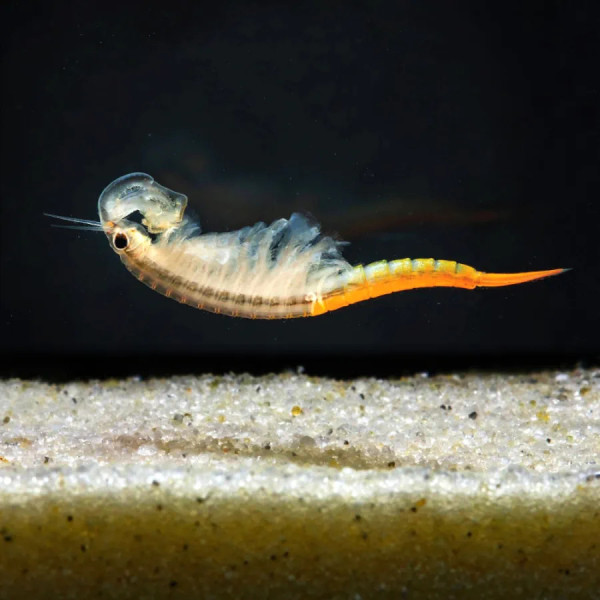
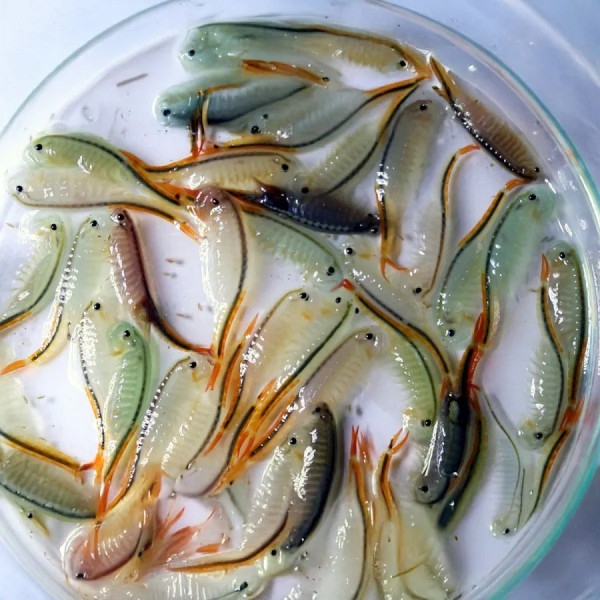
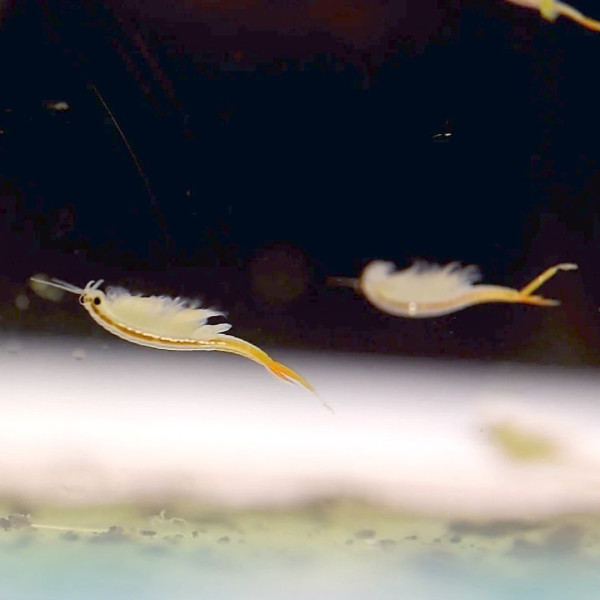
Branchinella thailandensis, a small freshwater anostracan native to Southeast Asia, falls into this category of potential prey. Like most Anostraca, it often shares the same temporary ponds, rice paddies, and seasonal pools as certain Triops species, creating a natural co-occurrence. Its adult size, between 2 and 3.5 cm, and its slow swimming at the surface or in open water make it an accessible target for a well-fed adult or subadult Triops. However, Branchinella thailandensis does not offer greater nutritional value than other organisms of comparable size and nutritional worth, such as daphnia, cyclops, juvenile brine shrimp, or other anostracans.
Learn more about the importance of Branchinella thailandensis in the diet of Triops...
Studies on the diet of Notostraca (Boix et al., 2006; Croel & Kneitel, 2011; Waterkeyn et al., 2016) confirm opportunistic predation on coexisting anostracans and cladocerans, but without specialization or dependence on a particular species of fairy shrimp.
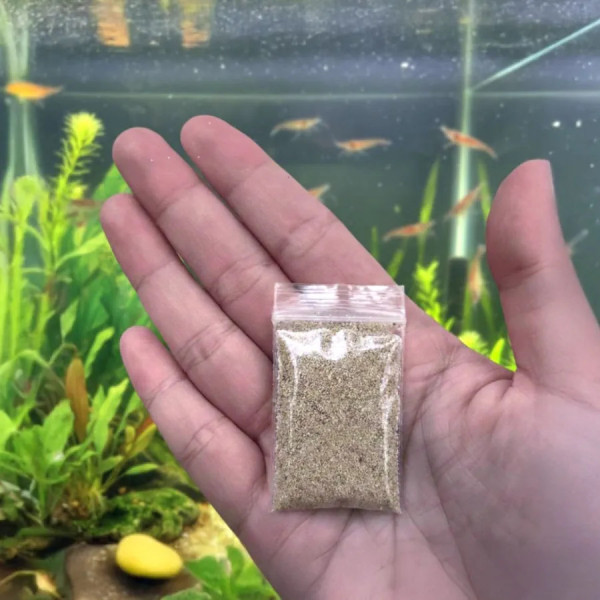
Branchinella thailandensis, like most Anostraca, produces resistance cysts (dormant eggs) at the end of its life cycle, an essential adaptation for surviving the seasonal desiccation of ephemeral habitats. These cysts, formed after sexual reproduction, are protected by a highly resistant chitinous shell and enter embryonic diapause. They can remain viable for several months to several years in dry conditions before resuming their development upon rehydration.
These specific eggs are designed for long-term survival and can therefore be harvested and stored.
Your order of Branchinella thailandensis eggs includes:
Branchinella thailandensis is a species of fairy shrimp native to Southeast Asia whose biology is closely linked to the rainfall cycle and the drying up of temporary pools. This adaptation manifests itself in the production of highly resistant cysts that can survive for long periods out of water before resuming their life cycle exclusively in freshwater.
In captivity, the hatching process is triggered simply by immersing the eggs in stable water between 22 and 25°C (or even 28°C or 30°C for faster hatching). Unlike brine shrimp, aeration or water movement is not necessary to induce hatching.
Within the specified temperature range (22 to 25°C), hatching generally occurs within 24 to 48 hours (although the total range extends from 8 hours to 3 days). The translucent larvae that emerge are attracted to light and have an initial nutritional autonomy of two days...
Learn more about cysts and the biological life cycle of Branchinella thailandensis...
Although rearing can be carried out in small volumes, success depends on close monitoring of water quality and rigorous management of feed intake after the initial growth phases.
Fairy Shrimp can be sensitive to water quality and temperature fluctuations. Please pay attention to these tips for optimal care:
Branchinella thailandensis can be prey for triops, but its importance in their diet should be understood as that of an optional live food and not a specific requirement. It falls into the general category of small anostracans that triops may capture and consume if they encounter them, in the same way that they eat daphnia, cyclops, or young brine shrimp. It is part of the diverse range of small anostracans that Triops consume as they encounter them in temporary ponds.
The main benefit of this cohabitation lies in the nutritional contribution these shrimp provide to their predators. Indeed, analysis of their composition reveals a remarkable nutritional density. We will now detail this aspect to better understand and grasp its importance within the Triops diet.
Nutritionally, Branchinella thailandensis is very rich in protein (≈ 65% on a dry matter basis) with a moderate lipid content and a good mineral profile. This profile is comparable to, or even superior to, that of brine shrimp, making it a high-quality live food for aquatic predators. Theoretically, for triops:
From a maintenance perspective, Branchinella thailandensis offers undeniable logistical advantages compared to other common prey such as brine shrimp.
Branchinella thailandensis is widely used as live food in tropical aquaculture. Its biochemical composition, analyzed in several studies on Thai fairy shrimp, makes it a food of high nutritional value.
Here are the average values reported for adults (dry weight) in the reference study on three Thai species (Dararat et al., 2012, Journal of Crustacean Biology):
254.41 µg/g (the highest concentration among the three Thai species analyzed), which explains its excellent potential for enhancing fish coloration (Dararat et al., 2012).
The main fatty acids identified in Branchinella thailandensis and related Thai fairy shrimps include:
These polyunsaturated fatty acids (PUFAs) and monounsaturated fatty acids are particularly beneficial for the growth, development, and health of Triops (as well as fish larvae and other crustaceans).
Like most Anostraca, fairy shrimp are rich in essential amino acids (especially leucine, isoleucine, valine, lysine, and arginine). Overall, they have a profile comparable to that of Artemia, with high digestibility and good coverage of essential amino acid requirements.
Even though Branchinella is not a major prey species, it plays a crucial indirect role:
By stabilizing the environment, it indirectly promotes the survival and growth of Triops.


